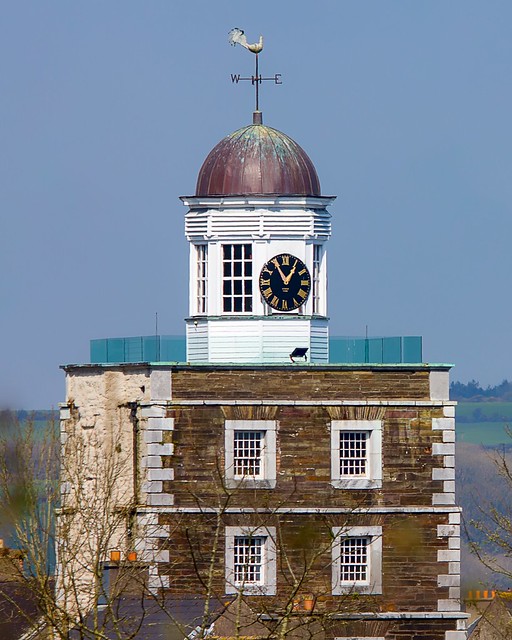
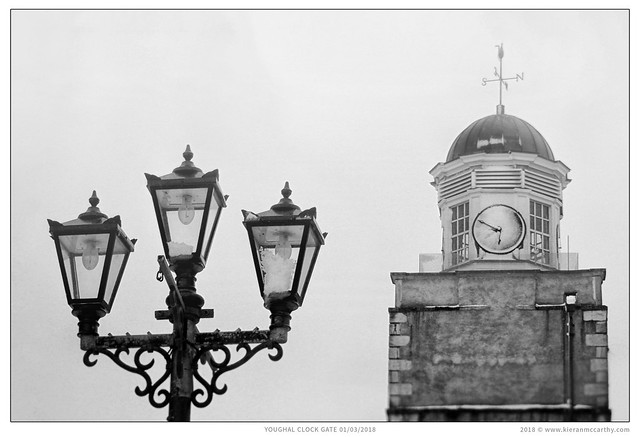
The Youghal Clock Gate Tower is one of the most recognisable landmarks in County Cork. Standing over the town’s main street, it has watched over Youghal for centuries and remains one of the strongest visual symbols of the town.
The present Clock Gate Tower was built in 1777 on the site of an earlier town gate. Over time, it served as a clock tower, civic landmark, prison, place of punishment, family home, museum and heritage attraction.
For visitors, it is more than a photo stop. The Clock Gate is one of the best places to begin exploring Youghal’s history, from its medieval walls and busy port days to its Georgian streets, prison stories and modern heritage tourism.
Why the Clock Gate Tower matters
The Clock Gate Tower matters because it tells several stories at once. It is part of Youghal’s medieval town story. It stands where the old town defences once controlled movement in and out of the town. It is part of Youghal’s civic story. Built in the 18th century, the tower became a visible sign of town authority, order and public timekeeping. It is part of Youghal’s prison story. For many years, the building held prisoners in cramped conditions above the main street.
It is also part of local memory. Generations of people in Youghal have known the Clock Gate as a meeting point, a landmark, a backdrop for photographs and a symbol of the town itself. Few buildings in Youghal carry so many layers of meaning in one place.

Before the Clock Gate: Youghal’s medieval town gates
Long before the present tower was built, Youghal was a walled medieval town. Its walls, gates and towers helped protect the settlement and controlled access to its streets, quays and trading areas.
The Clock Gate stands on the site of an earlier gate within this defensive system. Over time, as Youghal changed from a medieval port town into a more formal civic centre, the old gate gave way to the tower that stands today.
This is why the Clock Gate should not be seen as a stand-alone building. It belongs to a much wider historic landscape that includes Youghal Town Walls, St Mary’s Collegiate Church, Tynte’s Castle, Myrtle Grove and the old streets around North Main Street and South Main Street.
Built in 1777
The present Youghal Clock Gate Tower was built in 1777 by Youghal Corporation. It replaced an earlier gate structure and was designed to serve more than one purpose.
It held the town clock and bell, giving Youghal a public timepiece in a period when clocks were not available to everyone. It also housed the town gaol, making it both a practical civic building and a visible reminder of authority.
Its position over the street made it impossible to ignore. Anyone passing through the centre of Youghal passed beneath it. That physical presence is part of what made the building so powerful in the life of the town.
The Clock Gate as a prison
One of the darkest parts of the Clock Gate’s history is its use as a prison.
The upper floors were used to hold prisoners, including people awaiting trial, debtors and others caught up in the justice system of the time. Conditions in prisons of this period were often harsh, overcrowded and basic.
The Clock Gate’s location made punishment highly visible. This was not a prison hidden away from public view. It stood directly over the town’s main street, where people could see and hear the authority of the law in daily life.
That is part of what makes the building so powerful today. It is beautiful from the outside, but its history is not simply decorative. It carries stories of confinement, punishment, poverty, fear, survival and public control.
Rebellion, punishment and public memory
The Clock Gate is also associated with a more turbulent period in Irish history, including the years around the 1798 Rebellion.
Public punishment was intended to send a message. In a town like Youghal, where the Clock Gate stood at the centre of everyday movement, the building became part of that message.
This is one of the reasons the tower still has such a strong atmosphere. It was not just a place where time was kept. It was a place where power was displayed.
When visiting the Clock Gate today, it is worth remembering both sides of the story: the fine architecture and the human cost behind some of its history.
The town clock and bell
The clock and bell were central to the building’s purpose.
In the 18th and 19th centuries, a public clock was an important part of town life. It helped regulate working hours, markets, meetings, church attendance, travel and daily routine.
The Clock Gate gave Youghal a shared sense of time. Its bell and clock face were part of the sound and rhythm of the town.
The timeline of the tower includes several references to the clock, bell, clockkeepers and later changes to the clock mechanism. These details show how the building remained useful long after its prison function ended.
Architecture and appearance
The Clock Gate Tower is one of Youghal’s most distinctive buildings because of its unusual position over the street.
It is tall, formal and balanced, with a strong Georgian character. Its height, clock faces, cupola and central location give it a civic presence that still dominates the streetscape.
Unlike many historic buildings that sit back from the road, the Clock Gate forms part of the street itself. It frames the view through the town and creates one of Youghal’s most photographed scenes.
This is why the building works so well as a symbol of Youghal. It is not hidden away. It is built into the daily route of the town.
The McGrath family and later use
The Clock Gate was not only a prison and clock tower. It was also a home.
In the 20th century, the McGrath family became closely associated with the building. John McGrath and later his son Christy were responsible for winding the clock and ringing the bell.
Their story adds a very human layer to the tower. It reminds us that the Clock Gate was not just an official building or old monument. People lived there, worked there and cared for it.
This later domestic history helps connect the tower’s harder prison past with the more familiar local memories many people have of the building.
Restoration and reopening
The Clock Gate Tower was restored and reopened as a visitor attraction, allowing people to experience the building from the inside rather than simply viewing it from the street.
Today, guided tours help visitors understand the tower’s many roles across the centuries. The experience brings together Youghal’s medieval history, prison history, civic life, family stories and local identity.
The restoration of the tower also forms part of a wider effort to protect and promote Youghal’s heritage. Alongside sites such as St Mary’s Collegiate Church, the Town Walls and Youghal Lighthouse, the Clock Gate plays a major role in telling the town’s story to visitors.
Visiting Youghal Clock Gate Tower today
Today, Youghal Clock Gate Tower can be visited as a heritage attraction. Guided tours bring visitors through the building and explain its history floor by floor.
The tour experience usually explores the tower’s role as a town gate, clock tower, gaol and family home. Visitors can learn about the people connected with the building and see how one structure reflects hundreds of years of local history.
Because opening times, booking arrangements and seasonal availability may change, visitors should check the official visitor information before travelling.
Useful visitor tip:
If you are planning a heritage walk around Youghal, the Clock Gate is a natural starting point. From here, you can continue towards St Mary’s Collegiate Church, the Town Walls, Raleigh Quarter, Myrtle Grove, Tynte’s Castle and the seafront.
What to see nearby
The Clock Gate sits at the heart of historic Youghal, so it is easy to build a walking route around it.
St Mary’s Collegiate Church
One of Youghal’s most important historic sites, St Mary’s Collegiate Church is a short walk from the Clock Gate. It is closely connected with the town’s medieval and religious history.
Youghal Town Walls
The Town Walls help explain why gates like the earlier structure on the Clock Gate site mattered. They show how Youghal was defended and organised as a medieval town.
Tynte’s Castle
Another striking building on Youghal’s historic streetscape, Tynte’s Castle adds to the story of the town’s fortified and merchant past.
Myrtle Grove and the Raleigh Quarter
This area connects Youghal with Sir Walter Raleigh and the town’s Elizabethan history.
Youghal Lighthouse
A little further from the town centre, Youghal Lighthouse connects the town’s story with maritime history and the harbour.